Galapagos Ferries: Schedules, Routes, Prices & Travel Tips
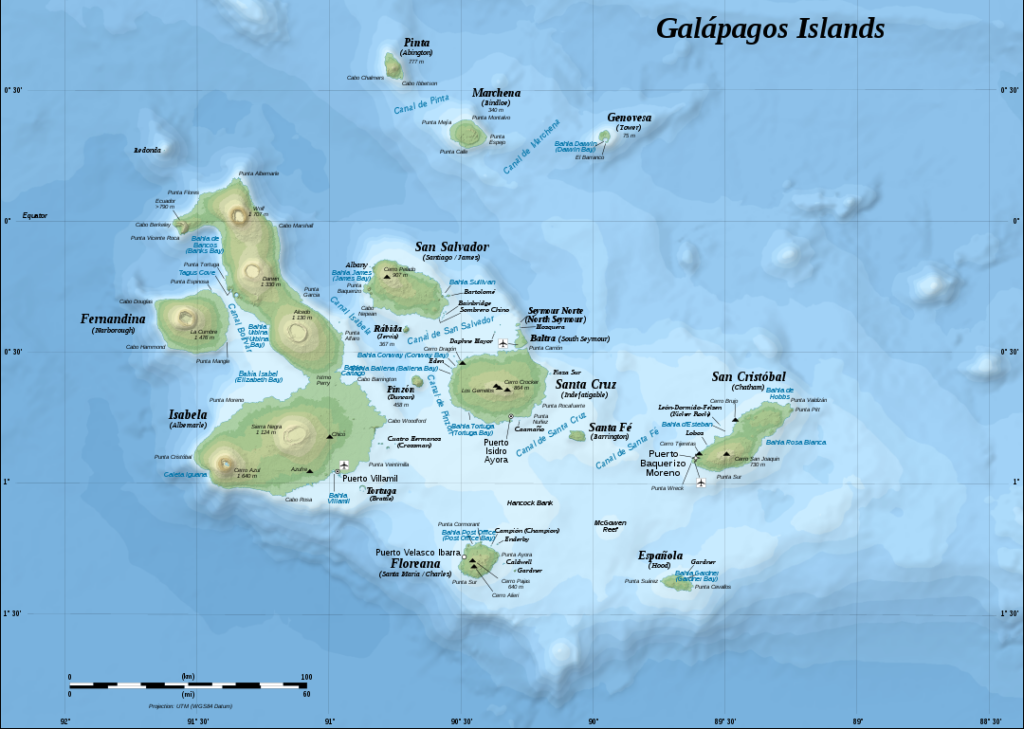
Interisland boats (lanchas) operate daily servicing Puerto Baquerizo Moreno, San Cristobal and Puerto Ayora, Santa Cruz as well as between Puerto Ayora and Puerto Villamil, Isabela. Departures are typically at 6 or 7am and at 3pm but may vary so be sure to confirm the schedule in advance. The trip takes about two hours depending on ocean conditions. Note: You CANNOT go directly from San Cristobal to Isabela by boat; you must travel to Santa Cruz first, then take another interisland boat to Isabela, which costs a total of $100 when purchased in cash on the islands. While it’s possible to catch the morning boat to Santa Cruz and then the afternoon boat to Isabela to get there on the same day, this is not recommended as it effectively uses up an entire day of your vacation. Emetebe and ESAV operate daily interisland air taxi service on 5-9 passenger prop planes for around $175 per person. We highly recommend flying, especially to get from Isabela to San Cristobal or vice versa.

What Are the Galapagos Ferries Really Like?
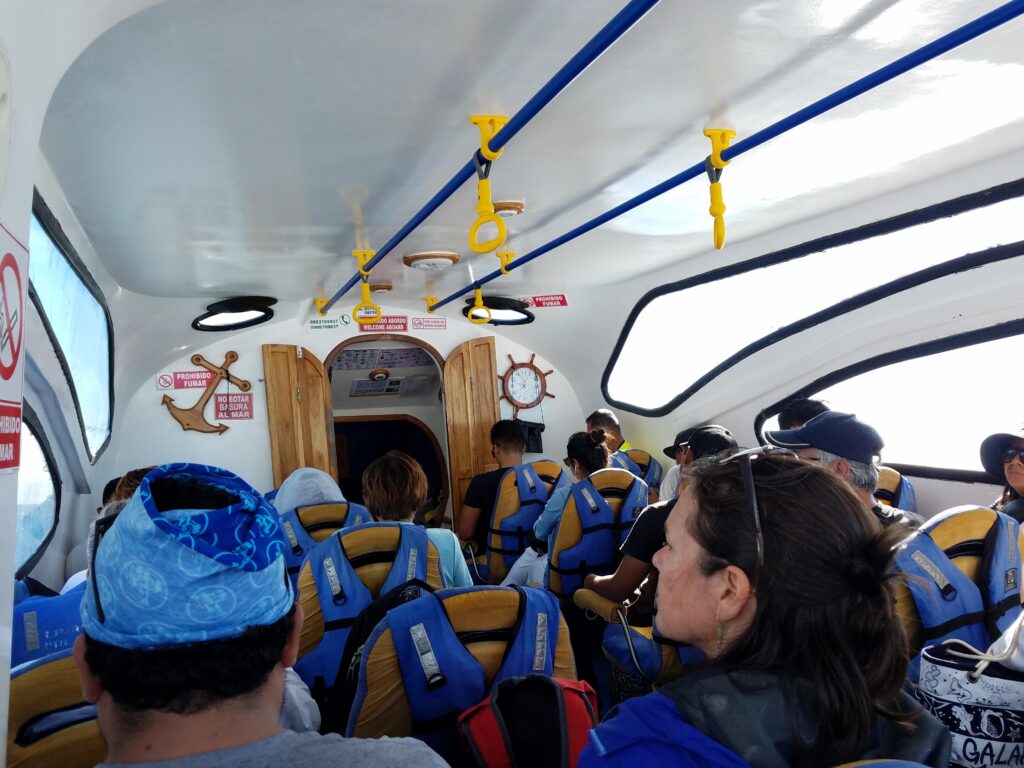
There are more than a dozen boats with an average capacity of 30 passengers that provide interisland service. The term “ferry” is a misnomer! These are simply enclosed-hull speedboats with several outboard motors. None of them are luxurious but some are more comfortable than others, primarily because of the seat design, which varies from individual, forward-facing cushioned seats to hard plastic seats to inward-facing bench seating. There are no assigned seats. The seats in the front nearest the bow will have no outside view and the air can get stuffy and may reek of trapped diesel fumes, while those in the back (stern) will be more exposed to the elements i.e. rain, wind, or ocean spray.

How Much Do Galápagos Ferries Cost?
As of August 11, 2026, the regular inter-island ferry fare for tourists is $50 per person, per one-way trip.
The new fare was established by Resolution MIT-SPTM-2026-0126-R. The fare for residents is $35 per person, while special ferry service is $65 per person for tourists and $50 for residents.
These are regulated fares rather than prices that fluctuate regularly. The higher “special service” fare applies when a route or departure time is offered outside the normal regular service.
You can purchase tickets from most local travel agencies with photo ID. During high season and holidays be sure to book well in advance. Many online sellers will charge more (consider it a convenience fee) and will only sell you a space for a specific day and time but not tell you exactly which boat you’ll be on. Also note that even if you are confirmed on a specific boat, there are sometimes last-minute changes and no one can 100% guarantee you’ll be on the boat you requested.
Be prepared to pay $1 per person ($1.50 in Puerto Ayora) for the water taxi from the pier to the boat and vice versa (one at departure and another at arrival). Isabela charges a $10 per person arrival tax ($5 for Ecuadorians). Be sure you have cash (small bills or change) readily available.
Luggage on Galapagos Ferries
You’re allowed to bring one carry-on bag plus one larger piece of luggage. It won’t be weighed or measured, but if you are obviously carrying more items then you may be charged a fee when you check in at the dock. For example, a surfboard bag costs $10. Anything larger than a small backpack will be piled into the hull along with whatever cargo is being transported.
Safety Features and Amenities on Galapagos Ferries
All boats are required to provide a life jacket for each passenger and should enforce wearing them throughout the trip. There is a rudimentary bathroom with a pump-to-flush toilet, but it will be almost impossible to use it during navigation due to the often rough conditions, so be sure to go before the trip gets underway. An attendant may pass out small water bottles or juice boxes and some cookies or crackers. Some of the newer boats have USB charging ports at every seat, and some have Starlink internet. Otherwise don’t expect to have cellular service or Wi-Fi while at sea.

How to Deal With Seasickness on the Galapagos Ferry
I take meclizine about 30 minutes before boarding the boat, wear acupressure wristbands, and carry a menthol inhaler and ginger candy. I prefer to sit near the back (stern) where there’s more fresh air circulating and I can more easily see outside. Some boats have videos running on a TV screen in the front; it is not advisable to look a these or your phone or a book (any fixed object) if you are prone to motion sickness. Even if you have never gotten seasick before, we recommend having a sturdy plastic bag and wet wipes handy just in case. We also do not recommend eating a heavy meal or drinking alcohol before taking the ferry.
Galapagos Ferry Check-In & Boarding
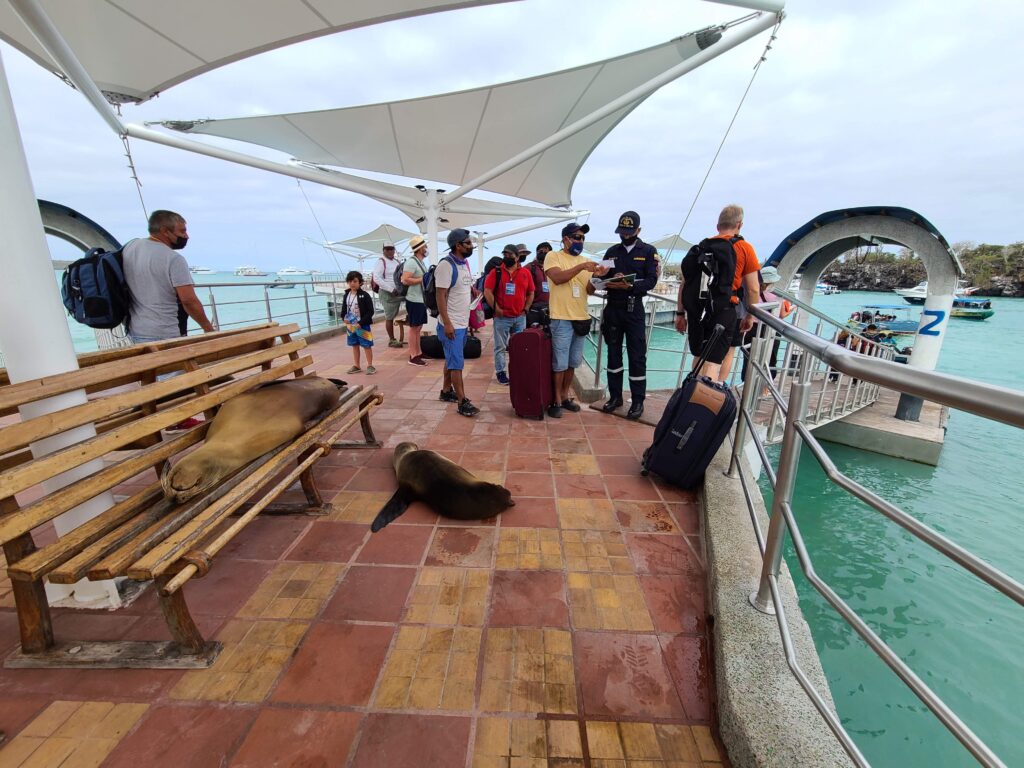
You’ll need to be at the dock 45 minutes prior to scheduled departure. Your name will be confirmed on the passenger manifest list — there is no paper or electronic ticket system so be sure you buy your tickets from a trustworthy agency. Your ID and immigration status may be verified prior to departure so be sure to have your documents ready. You’ll be given a plastic “boarding card” to hang around your neck, then you proceed with all of your belongings to the security checkpoint for screening. Your luggage will be hand-searched and/or x-rayed — they’re looking for forbidden items like fresh fruits or meat, or organic items (shells, sand, plants, etc.).
Next, you get in the designated line to board your boat. Note there is minimal seating or covered space on the pier, so be prepared to stand and get wet if the weather is inclement. Eventually, around 10 people at a time will be herded down the ramp into the water taxis. You must leave your larger luggage at the bottom of the ramp and take smaller items with you. The luggage will be piled, seemingly very precariously, on the bow of the water taxi. Please do NOT put fragile items in your checked luggage! As you are shuttled to the awaiting ferry boat the water taxi driver will ask everyone to pass their $1 ($1.50 in Puerto Ayora) fare to him. When you reach the ferry, everyone must stay seated and when instructed will take turns (alternating sides) to transfer. You may have to wait while the larger luggage is moved to the cargo hold. Just pay attention and get out of the way as the crew is trying to get everyone and everything loaded in a timely manner. You’ll want to have at least one hand free to hold on to the railing as you transfer from the taxi to the boat.
Once you’re on board, take a seat and get yourself ready for the journey. All boats have a rudimentary bathroom with a pump-to-flush toilet, but it will be almost impossible to use it during navigation due to the often rough conditions, so be sure to go before the trip gets underway. If you do need to use the bathroom, you’ll probably have to wait until the crew has finished loading the luggage. You’ll be instructed to put on your life jacket but don’t expect a formal safety briefing. Before you know it you’ll be on your way.
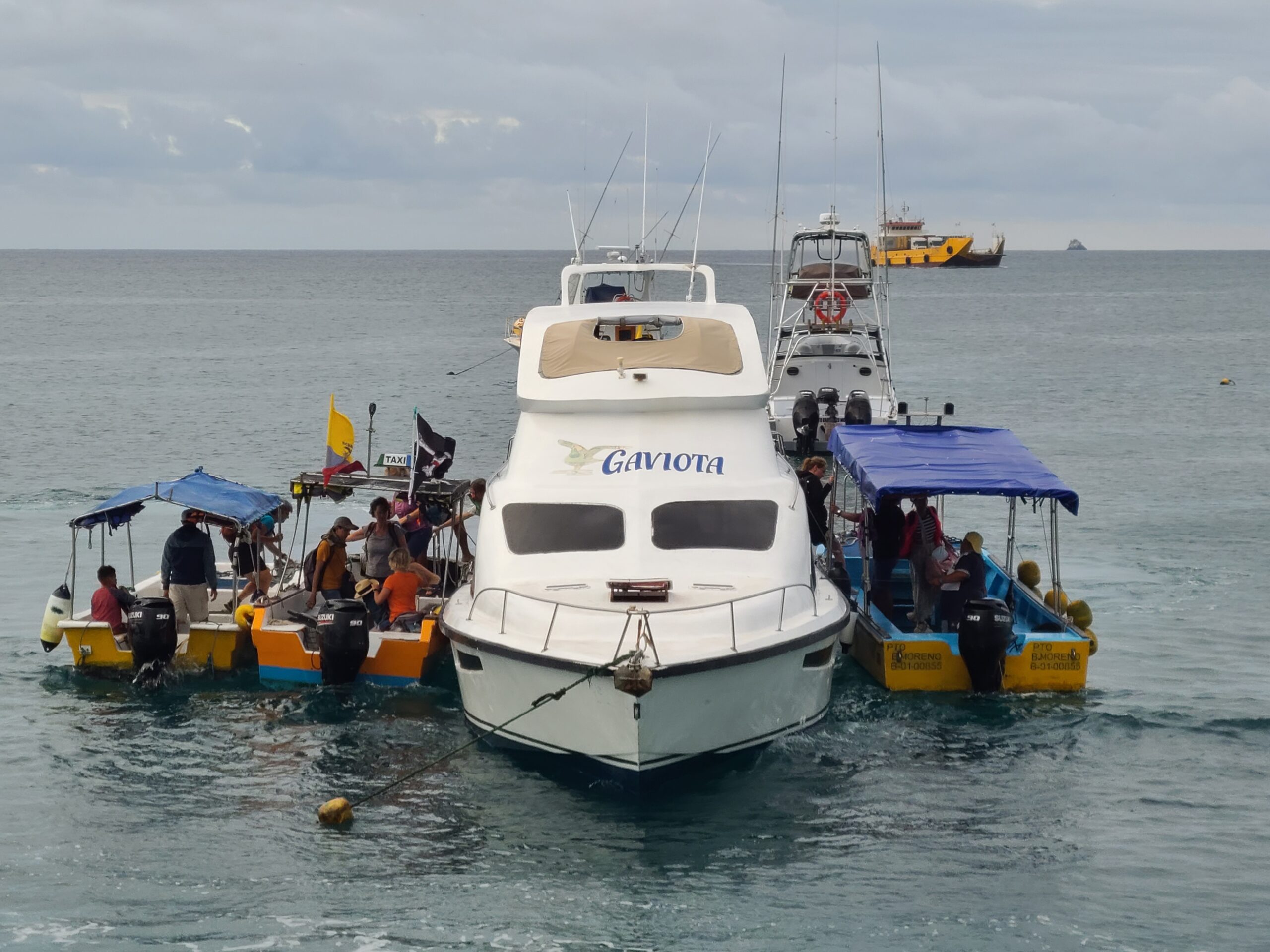
What Happens When You Arrive?
This is essentially the reverse of the boarding process. Upon arrival, you’ll transfer to a water taxi and then wait while luggage is loaded. You shuttle from the ferry to the dock, paying the $1-$1.50 fee to the water taxi. Upon arrival at the dock you’ll need to collect all of your luggage prior to walking up the ramp. You’ll pass through the security checkpoint — yes, your belongings will be x-rayed again. Depending on which island you’re arriving on, you’ll be required to pay the municipal tax (see the Costs section above).
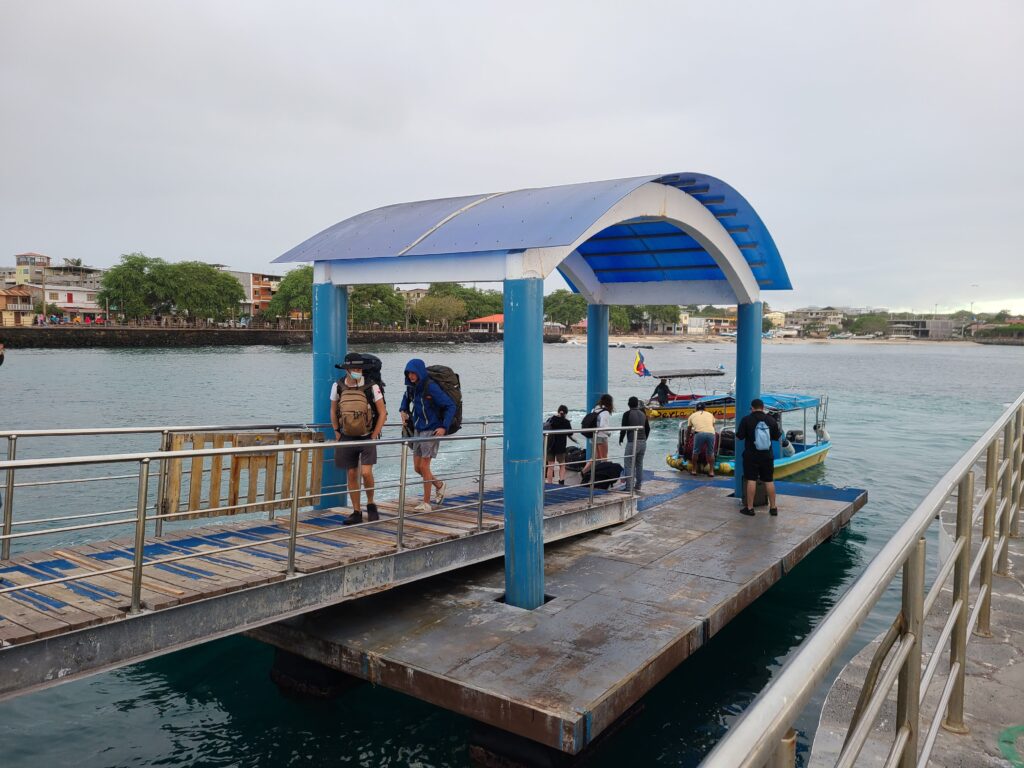
Congratulations, you have survived a ride on the Galapagos interisland ferry system!
Need help putting the pieces together?
We live in Galápagos and have extensive experience traveling throughout the islands. If you’re planning an island-hopping trip, we can help coordinate the transportation, accommodations, tours and activities that make up your itinerary. We don’t sell standalone ferry tickets, but we can arrange inter-island transportation as part of a larger itinerary with Galapagos Surf Discovery.
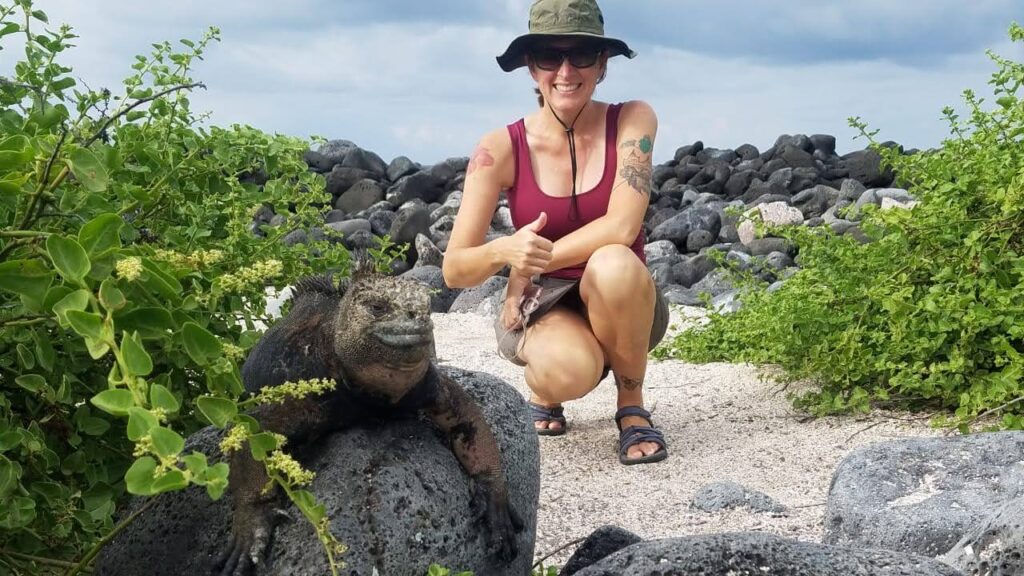
Alethea first came to the islands as a budget-minded solo backpacker and is now a local resident who has been on four Galapagos cruises, has done many day trips, and has visited all but a couple of the uninhabited islands. Contact us and tell us how we can help you plan your dream trip!
Is this website helpful for planning a trip to Galapagos? You can show your appreciation by clicking here.